
In plasma etching, deposition, and other critical vacuum processes, the wafer edge is often the most difficult region to stabilize. Edge behavior is shaped by a combination of field distribution, temperature gradients, gas-flow boundary conditions, and surface exposure—factors that can drive within-wafer non-uniformity, edge profile drift, and increased particle risk. The focus ring is designed specifically to reduce this “edge uncertainty.” By using its geometry and material properties to constrain and correct the edge environment, it improves process controllability and repeatability.
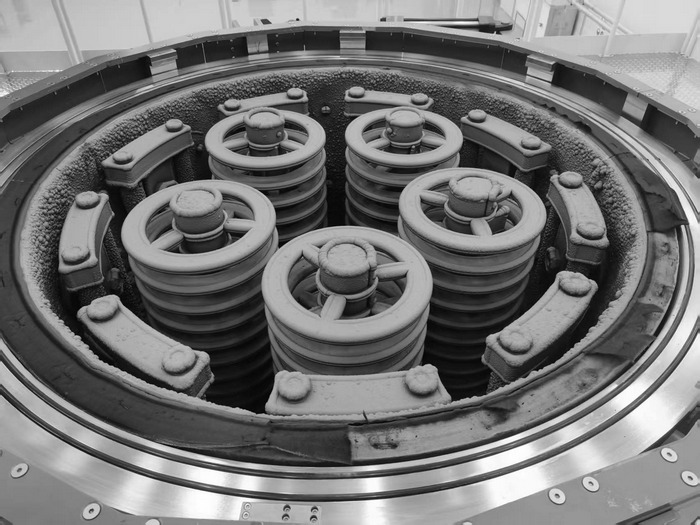
When the focus ring is made of silicon carbide (SiC), the benefits—plasma-erosion resistance, wear resistance, and thermal/structural stability—translate more directly into long-term consistency. This guide provides practical, implementable guidance on mechanisms, material advantages, selection criteria, installation and maintenance, and failure evaluation.
1. Core Function
A focus ring does more than “shield” or “fill space.” In many chamber designs, electric fields and plasma density are more prone to distortion near the wafer edge; at the same time, heat dissipation paths differ from those at the center, creating temperature non-uniformity. A focus ring influences process outcomes through:
-
Edge field conditioning: Adjusts edge electric field lines and sheath conditions, reducing abnormal reaction rates near the edge.
-
Geometric boundary control: Provides a stable “effective boundary” around the wafer perimeter, reducing uncertainty associated with an open boundary.
-
Thermal coupling (conduction/heat capacity): Creates more predictable heat exchange conditions at the edge, helping reduce temperature-gradient-driven variation.
-
Impact on gas flow and diffusion: Indirectly affects local recirculation, reactant concentration near the edge, and by-product accumulation tendencies.
As a result, focus rings are closely tied to edge-related metrics such as etch/deposition uniformity, edge CD/profile behavior, film-thickness consistency, defect/particle distribution, and the rate of process drift.
2. Why SiC
SiC adoption is rarely only about longer life. More importantly, its stability reduces chamber-condition evolution over time, lowering the frequency and magnitude of recalibration.
(1) Plasma erosion resistance and stable surface morphology
In fluorine- or chlorine-based chemistries, the focus ring is exposed to energetic species and reactive radicals. If erosion is significant, the surface roughens and dimensions change, which can drive edge-uniformity drift and particle generation. SiC typically offers improved erosion resistance and better shape retention under many operating conditions, helping slow performance degradation.
(2) Wear resistance and reduced chipping risk
Handling, micro-impacts, and thermal cycling can cause edge chipping, cracking, or powder shedding when toughness/strength are insufficient. SiC’s hardness and structural stability help reduce defect sources related to mechanical damage.
(3) Thermal properties that support edge consistency
SiC commonly provides favorable thermal conductivity, which can help stabilize edge temperature distribution. For temperature-sensitive recipes, reducing edge temperature variation often directly improves rate and profile consistency.
3. Selection Criteria
During selection, it helps to separate “it can be installed” from “it remains stable.” The first emphasizes dimensional fit; the second focuses on material, surface condition, and long-term behavior.
3.1 Geometry and tolerances: the baseline constraint for uniformity
Pay close attention to inner/outer diameters, thickness, flatness, concentricity, and chamfer/radius features. For edge-sensitive processes, small geometric differences can translate into noticeable edge rate or profile changes. When possible, build traceable correlations between key dimensions and process metrics, and convert them into incoming inspection standards.
3.2 Surface quality: a leading variable for particles and deposition behavior
Surface roughness, machining texture, and micro-defects affect deposition adhesion, cleaning residue, and particle-shedding probability. “Smoother is always better” is not universally true; some chemistries are sensitive to surface energy and adhesion behavior, and excessive polishing may change deposition/re-deposition dynamics. A more robust approach is to define an acceptable roughness window and enforce batch-to-batch consistency.
3.3 Purity and densification: setting the ceiling for lifetime behavior
Impurities, porosity, and microcracks reduce erosion resistance and can become latent particle sources. For advanced requirements, evaluate densification, defect rate, and batch stability, and incorporate them into supplier qualification and incoming quality control.
3.4 Electrical/dielectric properties (process- and chamber-dependent)
In certain chamber architectures, the ring’s electrical characteristics can influence edge field distribution. If you observe clear edge-performance changes after ring replacement, consider including electrical/dielectric parameters in validation rather than relying solely on dimensions and lifetime.
4. Installation and Replacement
Real-world performance depends heavily on installation consistency. The basic principles are: avoid micro-damage, avoid contamination, and ensure proper seating.
-
Pre-install checks: Visually inspect for chips, cracks, and hidden damage; check chamfers for burrs; confirm no packaging debris or dust remains.
-
Interface cleanliness: Seating and reference surfaces must be clean. Even a small particle can create local lift, leading to directional edge anomalies.
-
Tools and procedure control: Avoid hard tools contacting critical surfaces; standardize and quantify installation steps through an SOP.
If a recipe shift occurs immediately after replacement, first check concentricity, seating gaps, interface contamination, and mechanical interference—before making large recipe changes.
5. Cleaning and Maintenance
The goal of cleaning is to restore a controlled, repeatable surface state—not simply to make the ring look clean. Common risks include surface roughening from aggressive cleaning, chemical carryover, water marks/secondary contamination during drying, and micro-damage during handling.
A staged approach is recommended:
-
remove loose particles and easily detachable contaminants first;
-
use a chemistry matched to the process residue;
-
ensure thorough drying and clean storage to prevent recontamination.
Link cleaning cycles to process results. If you see particle increases after cleaning or unstable recovery in uniformity, suspect altered surface condition or exposed micro-defects.
6. Failure and Replacement Criteria
SiC focus rings often degrade gradually rather than failing abruptly. More actionable signals include:
-
edge uniformity degrades over time and tuning effectiveness diminishes;
-
defects/particles show clear directional clustering;
-
batch-to-batch variation increases under the same recipe, and drift accelerates;
-
localized roughening, abnormal discoloration, or wear tracks appear;
-
inspection after removal shows chamfer chipping, cracking, or abnormal wear.
A practical strategy combines thresholds + trends: define hard limits for key metrics (e.g., edge uniformity or particle levels) and also track trend indicators (drift rate, directional defect emergence) to avoid both premature replacement and delayed replacement.
7. Operational Recommendations to Realize SiC Stability Benefits
-
Close the loop between incoming data and process performance: bind key dimensions, surface parameters, and batch IDs to process outcomes for traceability.
-
Standardize installation and cleaning SOPs: reduce operator-to-operator variation in edge behavior.
-
Align maintenance cycles with monitoring metrics: drive maintenance by data rather than by wafer count alone.
-
Validate on critical recipes: for edge-sensitive processes, perform side-by-side validation during introduction (lifetime curve, uniformity drift, particle trends).
Post time: Jan-22-2026