
Among these critical components, the Tantalum Carbide (TaC) Planetary Disk plays an indispensable role in maintaining thermal stability, improving process consistency, and protecting graphite substrates under extreme processing conditions.
Although it is rarely visible outside the reactor, this engineered component directly influences epitaxial quality, equipment reliability, and wafer yield.
So, what exactly is a Tantalum Carbide Planetary Disk, and why has it become one of the most important components in modern semiconductor manufacturing?
What Is a Tantalum Carbide Planetary Disk?
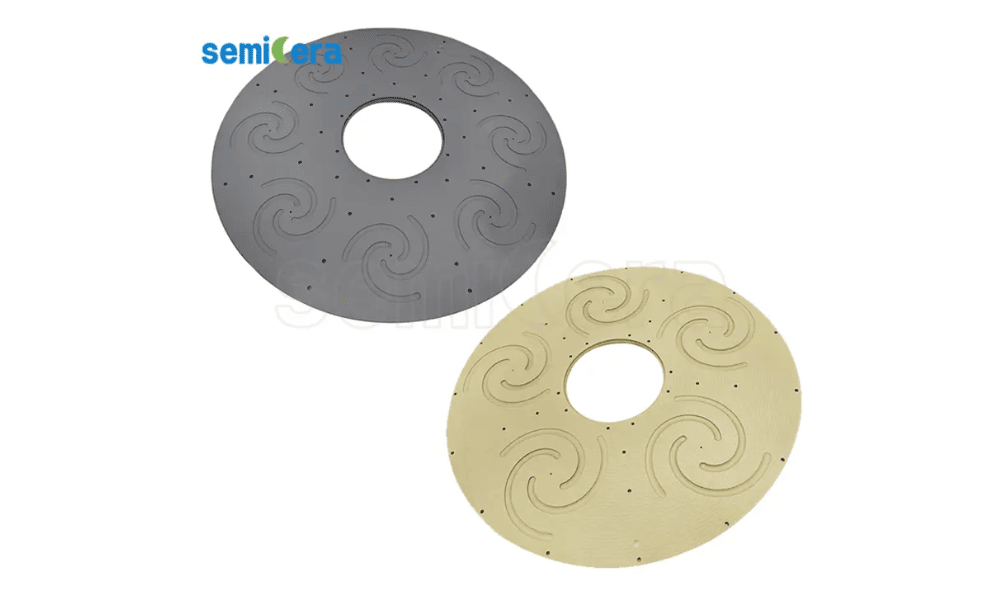
A Tantalum Carbide Planetary Disk is a precision-engineered graphite component coated with a dense layer of Chemical Vapor Deposited (CVD) TaC.
Its structure combines two complementary materials:
● Ultra-high-purity isostatic graphite substrate
● Dense CVD TaC protective coating
This hybrid design combines the excellent thermal conductivity and machinability of graphite with the exceptional hardness, chemical resistance, and thermal stability of tantalum carbide.
The result is a component capable of operating continuously in environments exceeding 1600°C, where ordinary graphite would gradually degrade.
Why Does Semiconductor Epitaxy Need TaC Planetary Disks?
Modern SiC and GaN epitaxy requires precise control of every process parameter.
Even slight variations in temperature or contamination can significantly affect:
● Film thickness
● Dopant distribution
● Crystal quality
● Wafer uniformity
● Device yield
The TaC Planetary Disk helps maintain process stability through four essential functions.
1. Maintaining Thermal Uniformity
Temperature uniformity is the foundation of successful epitaxial growth.
The TaC-coated surface provides stable thermal radiation while the graphite substrate efficiently transfers heat throughout the reactor.
Together they create a highly uniform thermal field, minimizing temperature gradients across the wafer.
Benefits include:
● Uniform epitaxial thickness
● Stable growth rates
● Improved repeatability
● Better crystal quality
2. Protecting Against Chemical Corrosion
Semiconductor epitaxy often involves aggressive gases such as:
● Hydrogen (H₂)
● Hydrogen Chloride (HCl)
● Silane (SiH₄)
● Methane (CH₄)
TaC serves as a dense chemical barrier that isolates the graphite substrate from the reactor environment, dramatically extending component lifetime.
3. Reducing Particle Contamination
Particle contamination remains one of the primary causes of yield loss.
Without protective coatings, graphite may release microscopic carbon particles after repeated thermal cycling.
A dense TaC coating greatly reduces:
● Surface erosion
● Carbon dust
● Particle generation
● Process contamination
4. Supporting Mechanical Stability
Planetary disks rotate continuously during epitaxial growth.
Their dimensional accuracy determines:
● Wafer positioning
● Rotation precision
● Gas flow distribution
● Film uniformity
TaC coatings help preserve surface integrity even after prolonged exposure to ultra-high temperatures.
Common Failure Modes of TaC Planetary Disks
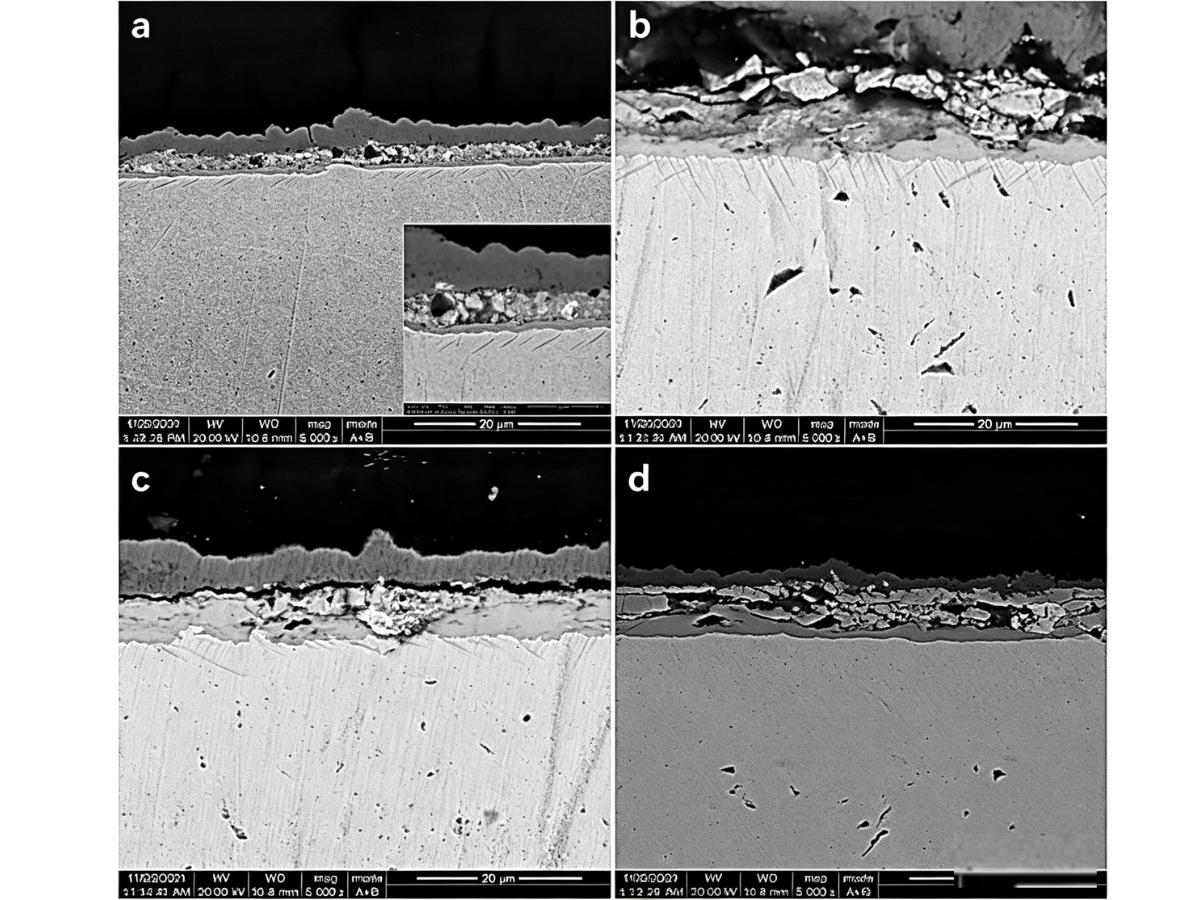
Despite their exceptional durability, TaC-coated components eventually experience wear.
Understanding common failure mechanisms helps maximize service life.
1. Coating Cracking
Thermal expansion differences between graphite and TaC create residual stresses during repeated heating and cooling cycles.
Over time these stresses may produce:
● Radial cracks
● Network cracks
● Circumferential cracks
● Coating Delamination
Poor coating adhesion or excessive thermal shock may cause the TaC layer to separate from the graphite substrate. Once delamination begins, the exposed graphite deteriorates rapidly.
2. Pinhole Formation
Microscopic pores created during coating deposition can allow corrosive gases to penetrate beneath the coating. This accelerates substrate oxidation and coating failure.
3. Edge Erosion
The disk edge experiences the highest gas velocity and largest thermal gradients. Consequently, edge erosion often appears before central wear.
4. Particle Generation
Surface cracks, oxidation, or coating spallation can release particles that contaminate wafers and reduce production yield.
How Can the Service Life Be Extended?
Extending component lifetime requires optimization throughout the manufacturing and operation process.
1. Select High-Purity Graphite
A homogeneous substrate minimizes internal defects and improves coating adhesion.
2. Optimize TaC Coating Quality
A premium CVD TaC coating should provide:
● High density
● Low porosity
● Uniform thickness
● Excellent adhesion
● Smooth surface finish
● Reduce Thermal Shock
3. Perform Preventive Maintenance
Routine inspection should monitor:
● Surface wear
● Coating thickness
● Microcracks
● Particle generation
● Edge erosion
FAQ
1. What is a Tantalum Carbide Planetary Disk?
A Tantalum Carbide Planetary Disk is a high-purity graphite component coated with CVD TaC, designed for semiconductor epitaxy to provide excellent thermal stability, corrosion resistance, and contamination control.
2. Why is TaC coating used instead of bare graphite?
TaC coatings significantly improve oxidation resistance, chemical stability, wear resistance, and particle control while preserving the thermal conductivity of the graphite substrate.
3. What causes TaC Planetary Disk failure?
Common failure modes include coating cracking, delamination, pinhole formation, edge erosion, oxidation, and particle generation caused by prolonged thermal cycling and harsh chemical environments.
4. How long does a TaC Planetary Disk last?
Service life depends on reactor conditions, operating temperature, coating quality, and maintenance practices. High-quality CVD TaC-coated disks typically last several times longer than uncoated graphite components under comparable process conditions.
About Semicera Semiconductor
Semicera Semiconductor specializes in the development and manufacturing of high-performance Tantalum Carbide (TaC) Planetary Disks and other advanced semiconductor graphite components. Leveraging high-purity graphite substrates, precision CNC machining, and advanced CVD TaC coating technology, Semicera delivers products with outstanding thermal stability, excellent coating adhesion, superior corrosion resistance, and long service life for demanding SiC epitaxy and semiconductor manufacturing applications.
Looking for a trusted supplier of TaC Planetary Disks or other advanced semiconductor components? Contact Semicera Semiconductor today to discuss your application. Our engineering team is ready to provide customized solutions and professional technical support for your semiconductor manufacturing needs.
Post time: Jul-10-2026