
As the global semiconductor industry accelerates toward higher power density, larger wafer sizes, and more demanding thermal processing environments, the limitations of traditional engineering materials are becoming increasingly evident. Modern epitaxial growth, crystal growth, and high-temperature chemical vapor deposition (CVD) systems now routinely operate at temperatures exceeding 1400°C–2200°C. Under such extreme conditions, conventional metallic materials suffer from thermal deformation, creep, contamination risks, and shortened service life. Even traditional graphite components, while widely used for decades, face growing challenges related to particle generation, oxidation sensitivity, and thermal fatigue during long production cycles.
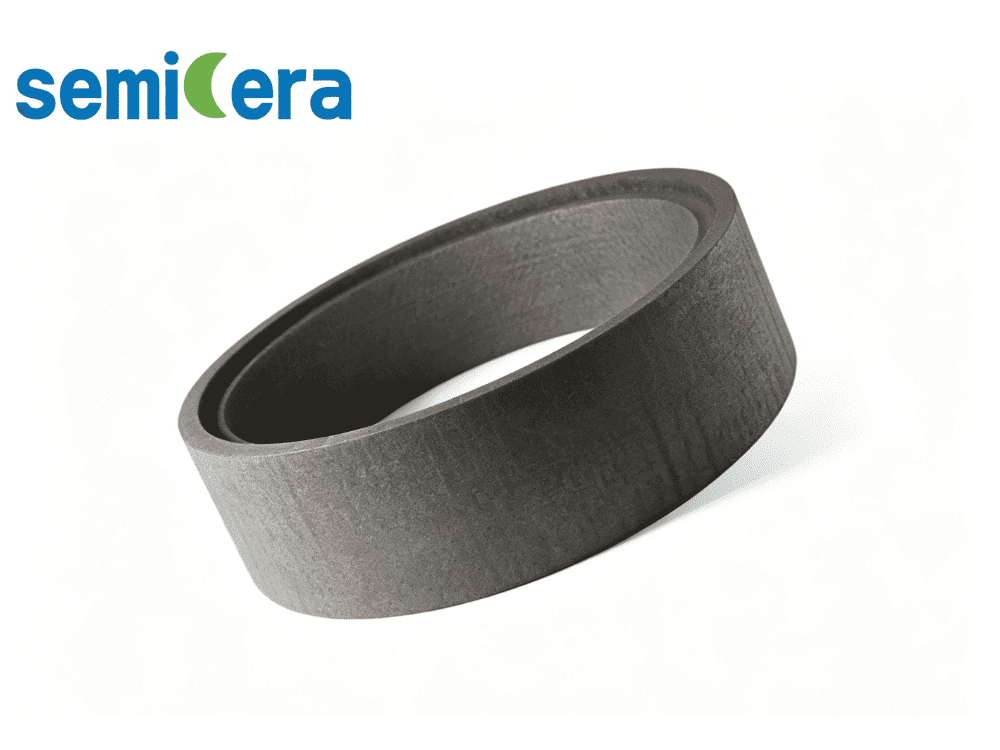
Against this backdrop, Reinforced Carbon Carbon Composite (RCC Composite) materials—also widely referred to as Carbon-Carbon Composites, Carbon Fiber Reinforced Carbon Matrix Composites, or C/C Composite Materials—have emerged as one of the most critical enabling materials in advanced semiconductor manufacturing equipment.
Today, reinforced carbon-carbon composite structures are increasingly integrated into:
●SiC epitaxial reactors
●MOCVD systems
●LPCVD furnaces
●Crystal growth systems
●High-temperature thermal processing equipment
Their role is no longer limited to “thermal insulation” or “mechanical support.” Instead, they have become essential materials for improving process repeatability, thermal uniformity, equipment uptime, and overall yield performance in next-generation semiconductor fabs.
What Is Reinforced Carbon Carbon Composite?
Reinforced carbon carbon composite is a high-performance engineered material composed of:
●Carbon fiber reinforcement
●A carbonaceous matrix formed through carbonization and graphitization processes
Unlike isotropic graphite, RCC materials possess a tailored composite structure that combines the exceptional high-temperature resistance of carbon with the superior mechanical strength of carbon fibers. Through repeated impregnation, densification, carbonization, and graphitization cycles, manufacturers can optimize density, thermal conductivity, and structural stability for semiconductor-grade applications.
In semiconductor equipment engineering, carbon-carbon composites are highly valued because they maintain structural integrity and dimensional stability under repeated thermal cycling and ultra-high-temperature environments.
Typical physical properties of semiconductor-grade reinforced carbon carbon composites include:
|
Property |
Typical Value |
Reference Range |
|
Operating Temperature |
>2000°C |
up to 2500°C |
|
Density |
1.55–1.95 g/cm³ |
depending on densification |
|
Thermal Conductivity |
20–200 W/m·K |
anisotropic |
|
Coefficient of Thermal Expansion (CTE) |
0.5–2.0 ×10⁻⁶/K |
extremely low |
|
Flexural Strength |
80–200 MPa |
fiber architecture dependent |
|
Specific Heat Resistance |
Excellent |
suitable for rapid thermal cycling |
One of the defining advantages of reinforced carbon-carbon composite materials is their exceptionally low thermal expansion coefficient. This characteristic is particularly important in semiconductor epitaxy processes, where thermal mismatch can directly affect wafer bow, film stress, and epitaxial layer uniformity.
At the same time, carbon fiber reinforced carbon composites exhibit excellent thermal shock resistance. Rapid heating and cooling cycles—common in SiC epitaxial growth and crystal growth furnaces—can easily induce cracking in conventional ceramics or isotropic graphite structures. RCC materials significantly reduce this risk while maintaining long operational lifetimes.
The Roles in Semiconductor Manufacturing
The adoption of reinforced carbon-carbon composite materials has grown rapidly alongside the commercialization of wide-bandgap semiconductors. In particular, the expansion of SiC power devices for electric vehicles, renewable energy systems, and industrial automation has dramatically increased demand for stable high-temperature process materials.
Within SiC epitaxial reactors, RCC composite structures are commonly used in:
● Susceptors
● Wafer carriers
● Heater support assemblies
● Thermal field structures
● Insulation components
These applications require materials capable of maintaining thermal stability during long-duration operation above 1600°C while minimizing contamination and particle generation.
Compared with conventional graphite, reinforced carbon-carbon composites provide:
● Improved mechanical durability.
● Longer maintenance intervals.
● Reduced thermal deformation.
● Better resistance to thermal fatigue.
● Enhanced process repeatability.
In MOCVD systems used for GaN and compound semiconductor manufacturing, carbon-carbon composite components contribute to more stable temperature distribution across the wafer surface. Improved thermal uniformity directly impacts epitaxial layer thickness consistency, doping uniformity, and device yield.
Similarly, in crystal growth systems—including SiC boule growth and sapphire crystal production—reinforced carbon carbon composite insulation systems help maintain precise thermal gradients throughout extended crystal growth cycles. This contributes to lower defect density and improved crystal quality.
As semiconductor fabs transition toward larger wafer formats such as 8-inch SiC wafers, the dimensional stability and thermal management advantages of RCC materials become even more critical.
Challenges of Reinforced C/C Composite Materials
Despite their advantages, reinforced carbon carbon composite materials still face several technological and industrial challenges.
One of the primary limitations is oxidation sensitivity at elevated temperatures in oxygen-containing environments. Carbon-based materials can oxidize rapidly under high-temperature exposure to oxygen, leading to material degradation and particle generation. For this reason, semiconductor-grade RCC components often require protective coatings such as silicon carbide (SiC coating) or pyrolytic coatings to improve corrosion resistance and cleanliness.
Another challenge involves manufacturing complexity and cost. Producing high-density carbon-carbon composites requires multiple impregnation and graphitization cycles, resulting in long production lead times and high manufacturing costs. Achieving semiconductor-grade purity further increases process difficulty, especially regarding metallic impurity control.
Anisotropic thermal conductivity is also a critical engineering consideration. Because thermal properties vary depending on fiber orientation, material design and process integration must be carefully optimized for each equipment architecture.
In addition, the semiconductor industry continues to demand:
● Lower particle generation.
● Higher purity levels.
● Longer component lifetime.
● Better compatibility with aggressive process chemistries.
This pushes reinforced carbon carbon composite suppliers toward increasingly advanced coating technologies and ultra-high-purity manufacturing capabilities.
Semicera Carbon Carbon Composite Solutions
As advanced semiconductor manufacturing continues evolving toward higher temperatures, larger wafers, and stricter process stability requirements, Semicera Semiconductor is committed to delivering high-performance reinforced carbon carbon composite solutions engineered specifically for semiconductor process environments.
Semicera Semiconductor provides a comprehensive portfolio of carbon-carbon composite products for epitaxy, crystal growth, and thermal processing applications, including:
● RCC susceptors
● Carbon-carbon composite wafer carriers.
● High-purity thermal field components.
● C/C composite insulation structures.
● SiC-coated carbon composite assemblies.
● Customized graphite and composite process parts.
Leveraging advanced densification technology, precision machining, and high-purity coating processes, Semicera’s reinforced carbon-carbon composite materials are designed to provide:
● Superior thermal stability.
● Extended service lifetime.
● Excellent thermal shock resistance.
● Low particle generation.
● Enhanced process repeatability.
Particularly in SiC epitaxial reactor applications, Semicera’s SiC-coated carbon-carbon composite solutions combine the mechanical advantages of RCC substrates with the corrosion resistance and cleanliness of silicon carbide coatings, helping semiconductor manufacturers improve uptime and reduce total cost of ownership.
To learn more about Semicera Semiconductor’s advanced carbon-carbon composite solutions for semiconductor equipment, contact our technical team for detailed product specifications and application support.
Post time: May-14-2026