
As the semiconductor industry continues to transition toward advanced logic devices, power semiconductors, compound semiconductors, and wide-bandgap materials, process temperatures are approaching the limits of traditional engineering materials. From silicon crystal growth and diffusion processes to silicon carbide (SiC) epitaxy and gallium nitride (GaN) deposition, thermal management has become one of the key factors affecting wafer quality, process uniformity, and manufacturing yield.
In these high-temperature environments, there is one component that is often overlooked: the semiconductor graphite heater.
Although graphite heaters are typically hidden inside reactors, crystal growth furnaces, and thermal processing systems, they are essential for generating the precise, stable thermal fields required for modern semiconductor manufacturing. Their performance directly impacts temperature uniformity, crystal defect density, epitaxial layer quality, and ultimately, device reliability.
This article explores the main types of semiconductor graphite heaters, their application-specific designs, industry trends, and common engineering challenges in high-temperature semiconductor processes.
Why Graphite Is the Preferred Heating Material for Semiconductor Furnaces
The growing popularity of graphite heating elements is primarily due to the unique combination of thermal, electrical, and mechanical properties found in high-purity graphite.
Unlike metallic heating materials, graphite maintains structural stability even at extremely high temperatures in inert or vacuum environments. Depending on the grade and operating conditions, graphite heating systems can operate continuously at temperatures exceeding 2000°C, and in some specialized crystal growth applications, temperatures can reach as high as 2500–3000°C. Furthermore, graphite offers excellent thermal shock resistance, a low coefficient of thermal expansion, high electrical conductivity, and high thermal conductivity, making it particularly well-suited for semiconductor heat treatment equipment.
Modern semiconductor-grade isostatic graphite typically features a thermal conductivity exceeding 100 W/m·K, a resistivity of approximately 8–13 μΩ·m, and an impurity content of less than 5 ppm after purification. These properties enable precise heating within semiconductor process chambers while minimizing the risk of contamination.
Consequently, graphite heaters have become a core technology in crystal growth furnaces, chemical vapor deposition (CVD) reactors, epitaxial systems, vacuum heat treatment equipment, and advanced semiconductor manufacturing tools.
Major Types of Semiconductor Graphite Heaters
Although commonly referred to as graphite heaters, semiconductor heating elements can be designed in a variety of geometries depending on furnace design and thermal field requirements.
The most traditional design is the cylindrical graphite heater, which surrounds the process area to provide highly uniform radiant heating. This configuration is widely used in silicon crystal pullers, silicon carbide (SiC) PVT crystal growth furnaces, and high-temperature annealing systems. By enclosing the thermal zone, cylindrical heaters generate a stable temperature gradient, which is critical for crystal growth and defect control.
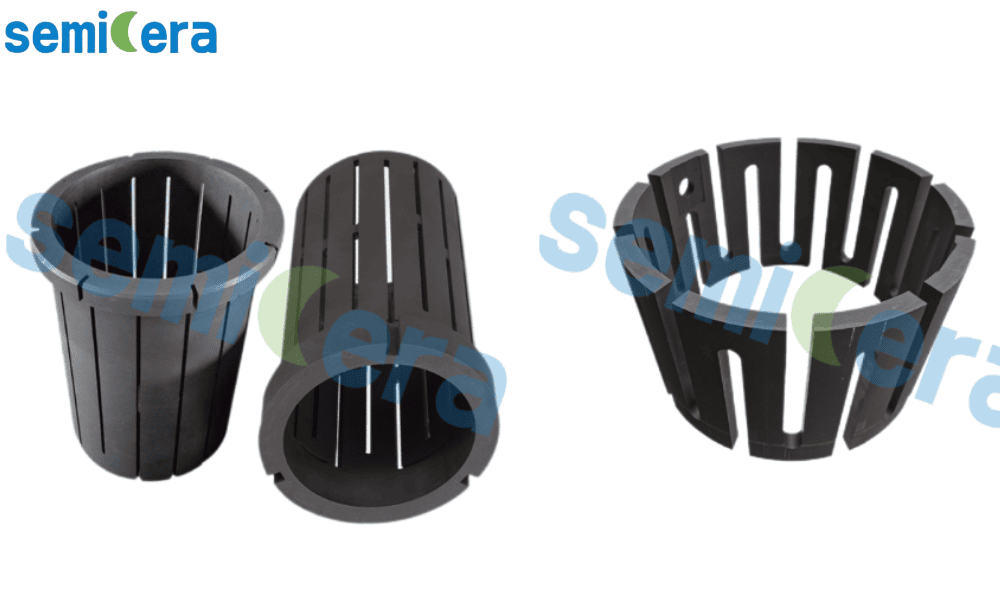
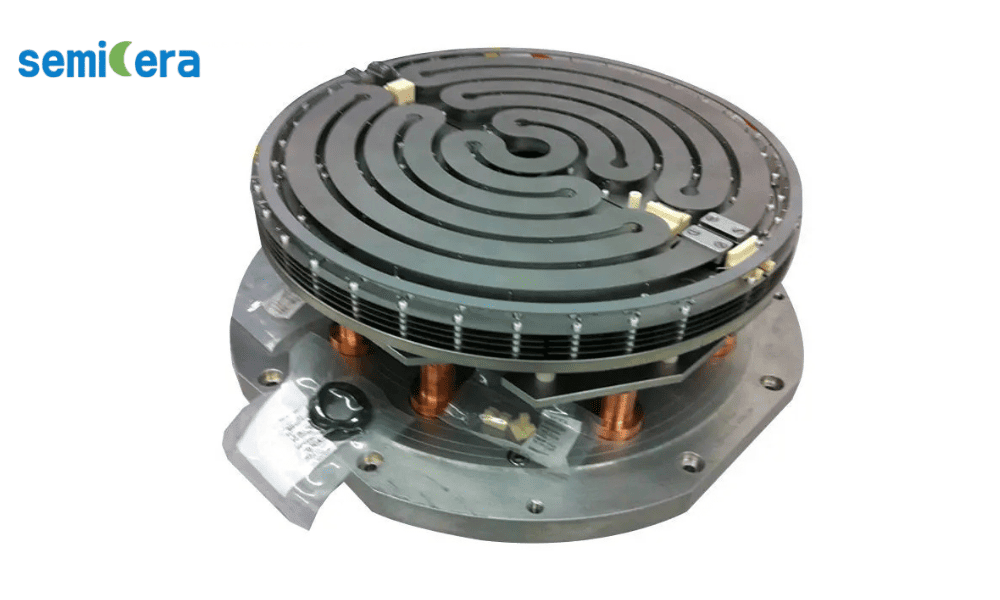
For applications requiring rapid thermal response, manufacturers typically employ plate-type graphite heaters. These flat heating structures are commonly integrated into wafer processing systems that require fast heating rates and localized temperature control. Their geometry enables efficient energy transfer while maintaining excellent surface temperature uniformity.
Another commonly used configuration is the annular graphite heater, which distributes heat circumferentially around the process chamber. Annular heaters are particularly important in thin-film epitaxial reactors, as temperature consistency from the edge to the center directly affects film thickness uniformity and dopant distribution.
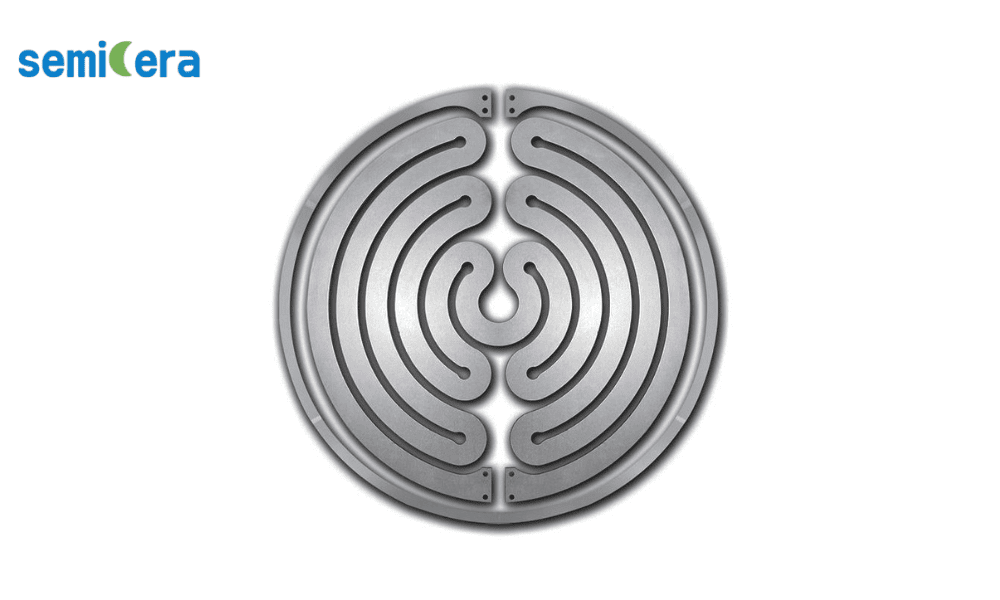
In advanced semiconductor equipment, particularly in silicon carbide (SiC) epitaxial reactors, multi-zone graphite heaters have become increasingly common. These systems divide the heating elements into independently controlled zones, allowing for real-time adjustment of central, intermediate, and edge temperatures. This configuration helps compensate for thermal drift and improves wafer-level temperature uniformity for larger substrate diameters.
For specialized vacuum furnaces and ceramic sintering applications, helical or patterned graphite heaters may also be employed. Their specially designed current paths optimize resistance distribution and heating efficiency while supporting extremely high operating temperatures.
Classification of Graphite Heaters by Semiconductor Application
The design of graphite heaters ultimately depends on the thermal requirements of the processes they support.
In single-crystal growth systems, graphite heaters are responsible for establishing a stable temperature gradient, thereby controlling crystal formation. In zone-melt silicon growth furnaces and silicon carbide physical vapor transport (PVT) systems, heater performance directly affects crystal diameter stability, dislocation density, and growth rates. Since silicon carbide sublimation growth typically occurs at temperatures above 2200°C, graphite remains one of the few commercially available heating materials capable of withstanding such high-temperature conditions.
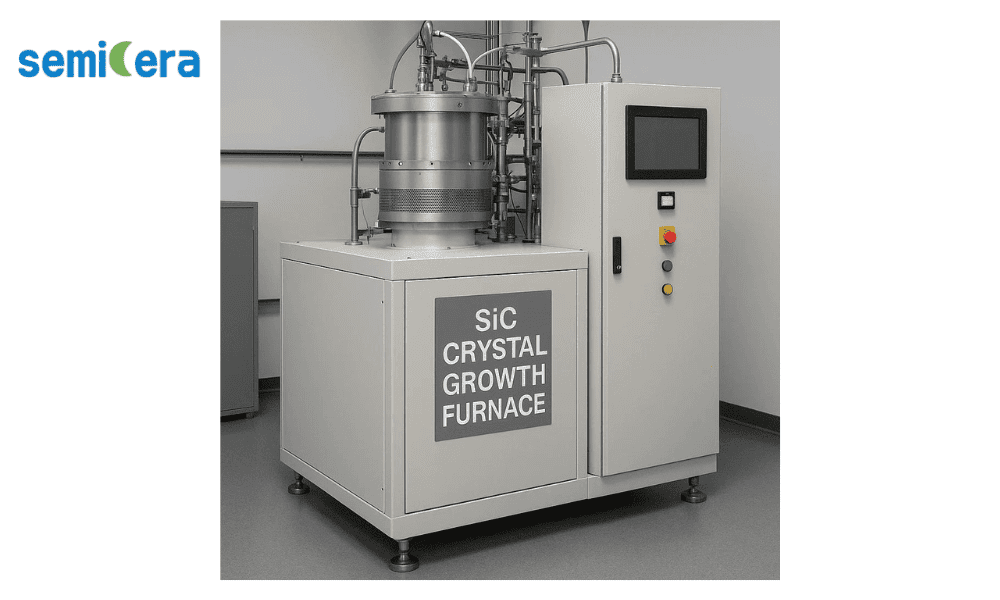
In epitaxial deposition equipment, graphite heaters provide the thermal energy required for precursor decomposition and film growth. Silicon carbide epitaxial reactors typically operate between 1500°C and 1700°C, and even minor temperature deviations can affect the uniformity of the epitaxial layer thickness, carrier concentration, and surface topography. Consequently, heater design has become a critical factor in reactor optimization.
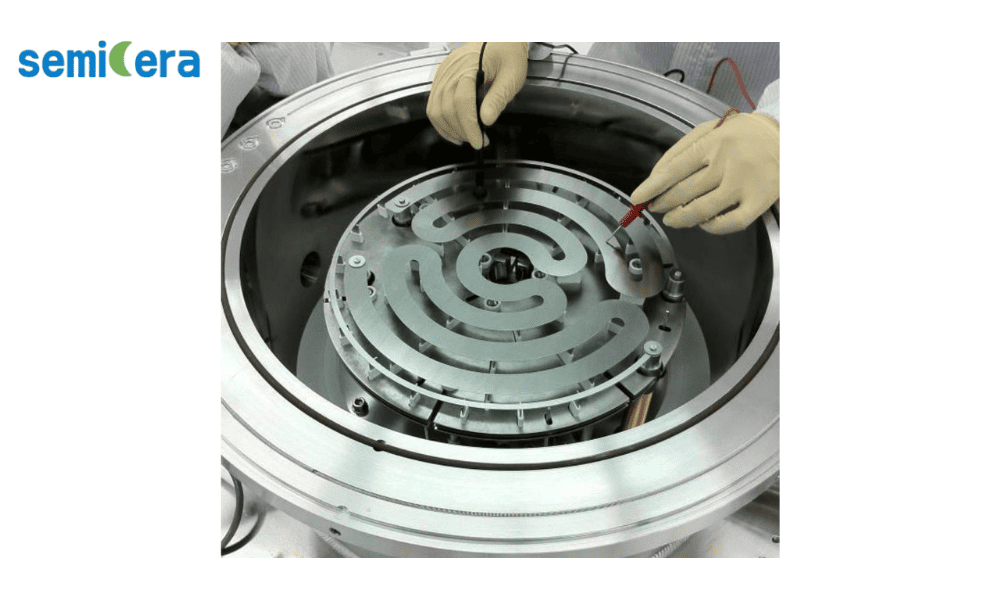
Graphite heaters are also widely used in metal-organic chemical vapor deposition (MOCVD) systems for gallium nitride (GaN)-based light-emitting diodes (LEDs), radio frequency (RF) devices, and power electronic devices. In these reactors, graphite heating elements are typically integrated with silicon carbide (SiC)-coated bases to provide a stable and contamination-resistant heating surface.
Furthermore, vacuum heat treatment furnaces rely heavily on graphite heating technology for the purification processes of semiconductor ceramics, quartz products, and advanced materials. Graphite’s compatibility with vacuum environments enables it to operate at temperatures unattainable by many metal alternatives.
The Most Critical Applications of Graphite Heaters in Semiconductor Industry
Among all semiconductor applications, three areas currently exhibit the highest demand for advanced graphite heating systems.
Silicon carbide (SiC) crystal growth
Driven by the rapid adoption of electric vehicles, renewable energy systems, and high-voltage power electronics, the silicon carbide industry has experienced unprecedented growth over the past decade. Crystal growth furnaces operating at temperatures exceeding 2300°C require high-purity graphite heaters to maintain stable temperature gradients throughout extended production cycles. Any deviation in heater performance directly impacts ingot quality and wafer yield.
Silicon carbide (SiC) epitaxy
As wafer sizes transitioned from 150 mm substrates to 200 mm substrates, temperature uniformity requirements became increasingly stringent. Multi-zone graphite heater systems are now widely adopted to achieve the precise temperature control required for next-generation epitaxial processes.
Gallium nitride (GaN) MOCVD manufacturing
Although the operating temperatures for GaN processes are lower than those for SiC production, the requirements for thermal stability and contamination control are extremely high. Graphite heaters combined with CVD SiC coatings have become the standard solution for maintaining reactor cleanliness and process repeatability.
In summary, these three markets represent the most technically demanding and fastest-growing segments within the semiconductor graphite heater industry.
Common Challenges and Failure Mechanisms
Although graphite heaters offer exceptional performance, they are not immune to operational challenges.
One of the most common issues is oxidation. Graphite oxidizes rapidly when exposed to oxygen at high temperatures. Even trace amounts of oxygen leaking into a high-temperature system can lead to material loss, structural weakening, and a shortened heater lifespan.
Another common issue is temperature non-uniformity. Heater aging, uneven current distribution, and thermal deformation can create localized hot spots, which can adversely affect crystal growth or epitaxial deposition quality.
Particle generation remains a critical issue in semiconductor manufacturing. Mechanical wear, thermal cycling, and surface degradation can release carbon particles into the process chamber, posing a contamination risk to wafers and sensitive device structures.
Over time, graphite heaters may also experience resistance drift due to microstructural changes at high temperatures. Since heater resistance directly affects power output, this drift gradually alters thermal field stability and process repeatability.
To address these challenges, leading semiconductor equipment manufacturers are increasingly combining ultra-high-purity isostatic graphite, silicon carbide (SiC) protective coatings, advanced thermal modeling, and predictive maintenance strategies to maximize heater reliability and process consistency.
Future Trends in Semiconductor Graphite Heaters
As semiconductor manufacturing technologies continue to evolve, graphite heater technology is undergoing significant transformation.
One of the most important trends is the shift toward ultra-high-purity graphite materials. Due to the increasing sensitivity of device structures to contamination, impurity levels must be reduced to parts per million (ppm). Semiconductor-grade isostatic graphite with ash content below 5 ppm is gradually becoming the industry standard.
Another key trend is the adoption of CVD silicon carbide-coated graphite heaters. Silicon carbide coatings improve oxidation resistance, reduce particle generation, enhance chemical compatibility, and significantly extend component lifespan in corrosive process environments.
Furthermore, the industry is moving toward large-area heating systems capable of supporting 200 mm silicon carbide wafers and future substrates with even larger diameters. Achieving uniform temperature distribution across these larger process areas requires increasingly complex heater geometries and control algorithms.
Meanwhile, digital thermal field control is emerging as a critical area of innovation. Multi-zone heaters that integrate real-time temperature feedback and simulation-driven thermal management are expected to play a central role in future smart semiconductor manufacturing platforms.
References:
1. SGL Carbon – SIGRAFINE Isostatic Graphite
2. CoorsTek – Carbon & Graphite Materials
3. Max Graphite – Isostatic Graphite Properties
4. Bapat, S.G., Nickel, H., Thermal Conductivity and Electrical Resistivity of POCO Grade Graphite to 3300 K, Carbon, 1973.
Post time: Jun-12-2026