
Against the backdrop of rapid advancements in advanced semiconductor manufacturing and third-generation power devices, SiC ceramic wafer boats are evolving from “auxiliary carriers” into critical components that influence yield and process windows. Focusing on core technical keywords such as “high-temperature wafer carrier,” “semiconductor furnace wafer boat,” and “SiC-coated wafer boat,” this article systematically analyzes their engineering value in core processes—including oxidation, diffusion, CVD, and annealing—from the perspectives of material properties, process coupling mechanisms, and industry trends.
Material Advantages: Why SiC Rather Than Quartz (Quartz Wafer Boat)
From a materials science perspective, the reason SiC ceramic wafer boats have become the preferred choice for advanced processes stems from their comprehensive advantages across three key dimensions: “high-temperature stability,” “low contamination,” and “structural strength.” Compared to traditional quartz wafer boats, SiC offers higher thermal conductivity and a lower coefficient of thermal expansion, resulting in virtually no creep or deformation during prolonged operation at temperatures above 1000°C. This characteristic directly determines the spatial consistency of the wafer within the furnace tube, thereby influencing the uniformity of the oxide layer thickness and the precision of dopant distribution.
In terms of chemical stability, SiC exhibits greater inertness toward typical semiconductor atmospheres such as chlorides, hydrogen, and ammonia, making it the representative material for “low-contamination wafer carriers.” For advanced logic processes (such as nodes below 28 nm) and the manufacturing of SiC power devices, this low-contamination characteristic has evolved from an “advantage” to an “essential requirement.”
Applications of SiC Wafer Boats in Semiconductor Processes
In actual fabs, semiconductor wafer boats not only serve a mechanical support function but also play a critical role in the process formation through the coupling of thermal fields and gas flow. Their design and materials directly influence three core metrics: “temperature uniformity,” “gas flow distribution,” and “particle control.”
1. Thermal Oxidation: The Invisible Controller of Interface Quality and Uniformity
In the thermal oxidation process, wafer spacing and thermal distribution have a decisive impact on the quality of the oxide layer. Thanks to their high-rigidity structure, SiC ceramic wafer boats can maintain stable slot geometry even under prolonged high temperatures, thereby achieving superior oxide thickness uniformity. At the same time, their high thermal conductivity helps reduce temperature differences between wafers, minimizes edge effects, and improves overall batch consistency.
2. Diffusion Furnace: Reducing the Memory Effect and Cross-Contamination
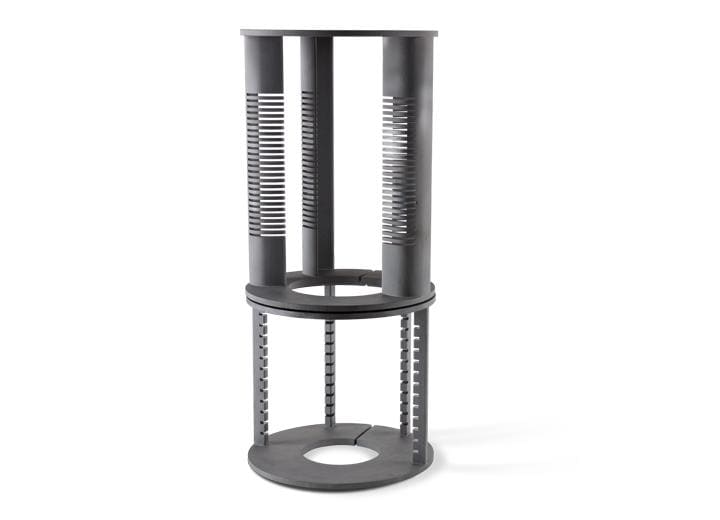
In the “dopant diffusion process,” traditional quartz materials easily adsorb dopant elements (such as B and P) and release them in subsequent batches, creating the so-called “memory effect.” In contrast, SiC wafer boats for diffusion furnaces exhibit lower adsorption and release tendencies, effectively suppressing cross-contamination. This characteristic is particularly critical for mixed process lines, significantly improving lot-to-lot consistency and equipment stability.
3. LPCVD and Epitaxy (CVD / Epitaxy): Core Factors for Film Uniformity and Defect Control
In applications such as “LPCVD wafer boats” and “epitaxy wafer carriers,” the low particle release characteristics of SiC materials significantly reduce the risk of “particle contamination in semiconductors.” At the same time, its excellent thermal stability ensures a more uniform temperature distribution during film deposition, thereby optimizing “film thickness uniformity” and “defect density.”
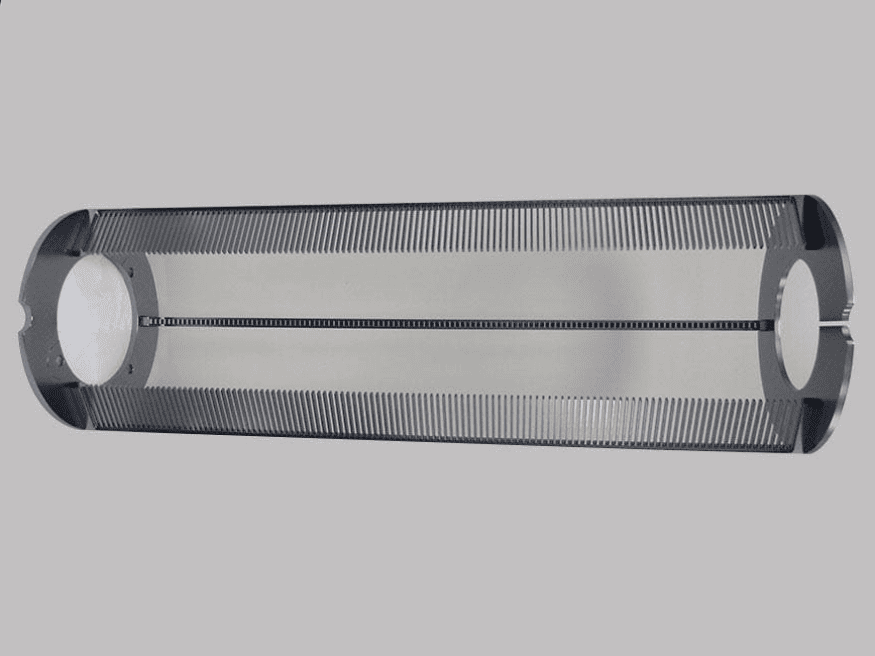
For SiC and GaN epitaxial processes, SiC-coated wafer boats have even become standard equipment, with their performance directly impacting the dislocation density of the epitaxial layer and device reliability.
4. High-Temperature Annealing: Thermal Budget Control and Structural Stability Assurance
During the “high-temperature annealing” process, wafer warpage and thermal stress control present key challenges. Leveraging its high rigidity and thermal conductivity, the SiC ceramic wafer boat effectively reduces stress concentration caused by temperature gradients, thereby enhancing dopant activation efficiency and device performance consistency.
Engineering Challenges and Optimization Directions: From Cost to Reliability
As industry trends represented by keywords such as “SiC power devices,” “EV semiconductors,” and “wide bandgap semiconductors” continue to gain momentum, the application of SiC wafer boats is rapidly expanding. From traditional CMOS processes to the manufacturing of SiC MOSFETs for new energy vehicles, the growing demand for high-temperature, high-purity, and low-defect processes continues to reinforce the irreplaceable nature of SiC materials.
Particularly in SiC wafer manufacturing, where process temperatures can exceed 1,600°C, high-temperature SiC wafer carriers have become the only viable solution, driving rapid growth in the “SiC furnace components” segment.
Although the number of SiC ceramic wafer boat suppliers is gradually increasing, high costs and processing difficulties remain significant constraints. Focusing on technical approaches such as “CVD SiC coating,” “dense SiC ceramic processing,” and “precision machining of SiC,” the industry is continuously optimizing the lifespan and reliability of these components.
Furthermore, particle control remains a key area for improvement. Leading manufacturers are reducing the “risk of particle shedding” by optimizing coating density and interfacial bonding strength, thereby meeting the extreme cleanliness requirements of advanced processes.
The Evolution from “Carrier” to “Process Control Node”
From an engineering perspective, the SiC ceramic wafer boat is no longer merely a “wafer holder,” but a critical component deeply embedded within the semiconductor process system. By influencing thermal fields, gas flow, and contamination control, it directly determines “yield improvement,” “process stability,” and “device performance.”
In the future, technological advancements in areas such as “advanced semiconductor manufacturing,” “SiC device fabrication,” and “high-temperature furnace components” will further solidify the strategic position of SiC wafer boats within the industry chain. For equipment manufacturers and wafer fabs, material innovation and structural optimization centered on this critical component will become a key driver for enhancing competitiveness.
Post time: Apr-17-2026