
In modern semiconductor epitaxy, process stability is no longer determined solely by reactor design or gas chemistry. As wafer sizes continue to increase and device architectures become more complex, the performance of core hot-zone components has become a decisive factor in epitaxial layer quality, yield stability, and equipment uptime. Among these critical components, the TaC planetary disk has emerged as one of the most important materials engineering solutions for advanced epitaxial growth systems.
What is a TaC planetary disk
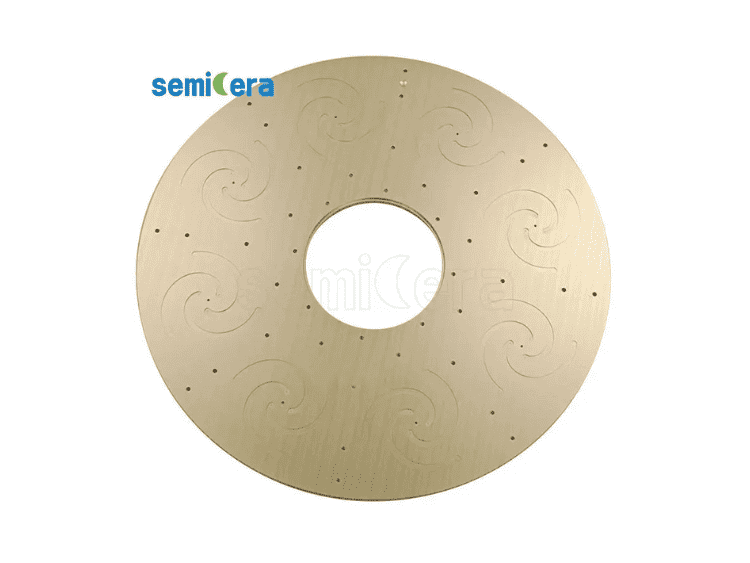
A TaC planetary disk, also referred to as a tantalum carbide coated planetary susceptor disk, is a high-temperature semiconductor component primarily used in MOCVD and CVD epitaxy reactors. It serves as the rotating carrier platform that supports wafers during epitaxial growth processes. In advanced compound semiconductor manufacturing — particularly for SiC, GaN, and power semiconductor applications — the planetary disk operates directly inside extreme thermal and chemical environments where process temperatures often exceed 1400°C.
Under these conditions, conventional graphite susceptors alone are no longer sufficient to meet modern process requirements for purity, corrosion resistance, and thermal stability. This is where TaC coating technology becomes essential.
TaC planetary disk material and physical properties
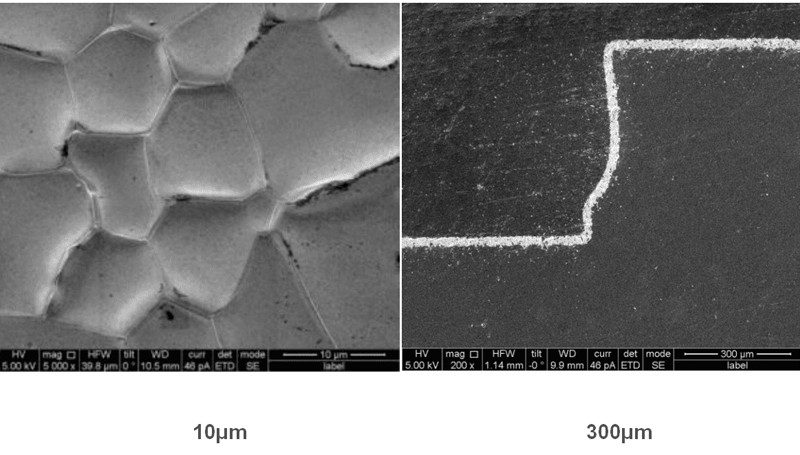
Tantalum carbide (TaC) is one of the most thermally stable refractory ceramic materials currently used in semiconductor process hardware. TaC has a melting point of approximately 3880°C, placing it among the highest melting-point ceramic materials known in industrial applications. In addition, TaC exhibits excellent chemical inertness under hydrogen-rich and ammonia-containing epitaxial environments commonly used in SiC epitaxy and GaN MOCVD processes.
A typical TaC planetary disk consists of an ultra-high-purity isostatic graphite substrate coated with a dense tantalum carbide layer deposited through chemical vapor deposition (CVD) technology. The TaC coating thickness generally ranges between 50 μm and 200 μm, depending on process requirements and reactor configurations. The coating acts as a protective barrier that isolates the graphite substrate from corrosive process gases, high-temperature hydrogen etching, and metallic contamination.
Applications in semiconductor processes
The physical properties of TaC make it exceptionally suitable for semiconductor epitaxial applications. TaC exhibits a hardness of approximately 9–10 Mohs, excellent wear resistance, and high thermal conductivity relative to many advanced ceramics. More importantly, its thermal expansion characteristics are relatively compatible with high-purity graphite substrates, helping minimize coating delamination and thermal cracking during repeated heating cycles.
In SiC epitaxy reactors, planetary disks are subjected to some of the harshest process conditions found in semiconductor manufacturing. Typical SiC epitaxial growth processes operate between 1500°C and 1650°C under hydrogen ambient conditions with chlorinated precursor gases such as silane and propane. Hydrogen at elevated temperatures can aggressively attack exposed graphite surfaces, leading to particle generation, surface erosion, and reactor contamination. TaC coating significantly improves resistance to hydrogen corrosion and helps extend component operational lifetime.
Common process defects
In practical production environments, even minor instability in the planetary disk surface may result in measurable process deviations. Surface roughening, coating microcracks, or localized contamination can alter wafer temperature distribution and gas flow dynamics inside the reactor. In advanced epitaxy systems, temperature non-uniformity as small as ±1°C to ±2°C across the wafer surface may affect epitaxial thickness uniformity and dopant concentration control.
One of the major engineering challenges in TaC planetary disk manufacturing is coating integrity. Because TaC and graphite possess different thermal expansion coefficients, poor coating processes may lead to stress accumulation during thermal cycling. Over time, this can produce coating delamination, edge cracking, or particle generation. Advanced coating process control is therefore essential for maintaining long-term reactor reliability.
Another critical challenge is purity control. Semiconductor epitaxy processes are extremely sensitive to metallic contamination. Impurities such as iron, nickel, or sodium introduced from low-quality coating processes may directly impact device electrical performance. For this reason, semiconductor-grade TaC coatings typically require ultra-high purity raw materials and tightly controlled deposition environments.
Why choose Semicera?
At Semicera Semiconductor, the development of advanced TaC coated planetary disks focuses not only on material durability, but also on process compatibility with modern epitaxial reactors. Through optimized CVD TaC coating technology, high-density graphite substrate engineering, and precision machining capability, Semicera Semiconductor provides process components designed for high-temperature epitaxy stability and long operational lifetime.
The company’s TaC coating solutions are engineered to support demanding semiconductor applications including:
● SiC epitaxy
● GaN MOCVD
● Power semiconductor manufacturing
● High-temperature CVD processing
● Advanced compound semiconductor production
Future Outlook
In addition to coating uniformity and purity control, thermal management performance has become another major differentiator for next-generation TaC planetary disks. Optimized thermal conductivity and coating density help improve wafer temperature consistency during high-speed rotation inside planetary reactors, contributing to more stable epitaxial growth rates and reduced wafer-to-wafer variation.
As semiconductor manufacturing transitions toward larger wafer sizes such as 6-inch and 8-inch SiC wafers, the engineering requirements for planetary disks become even more demanding. Larger wafers increase thermal stress sensitivity and require tighter control of reactor temperature fields. Under these conditions, the dimensional stability and coating integrity of TaC planetary disks become critical for maintaining production yield.
Looking ahead, the demand for advanced TaC-coated semiconductor components is expected to continue growing alongside the expansion of electric vehicles, renewable energy infrastructure, AI power systems, and next-generation industrial electronics. As epitaxial process windows become narrower and device reliability standards continue to increase, the role of high-performance process hardware such as the TaC planetary disk will only become more important.
For semiconductor manufacturers seeking long-term reactor stability, lower contamination risk, and improved epitaxial process repeatability, TaC-coated planetary disks represent not simply a consumable component, but a strategic materials engineering solution for advanced semiconductor fabrication.
Post time: May-08-2026